
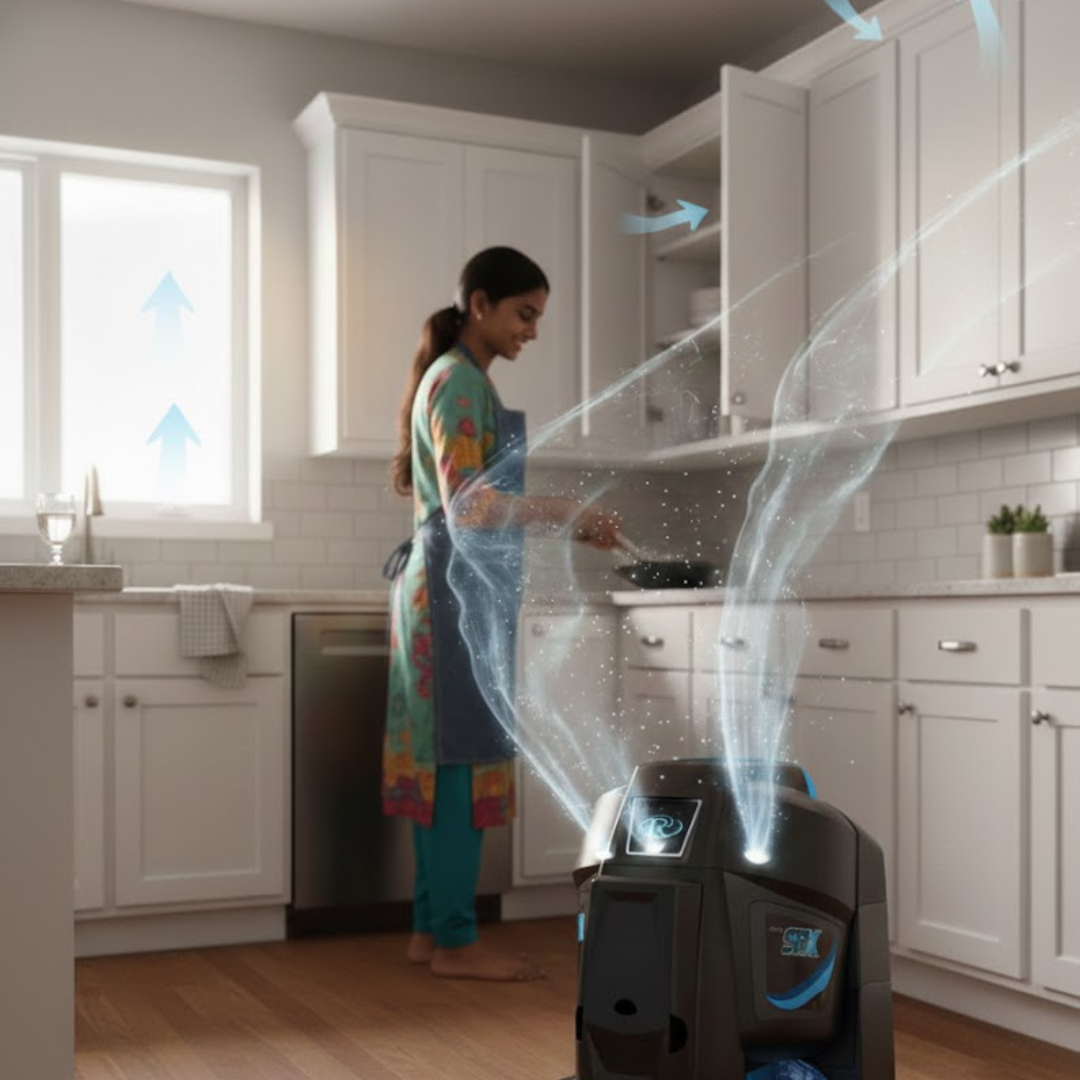
Air purifier for allergy support is essential in bathrooms and kitchens, the most moisture-prone areas in any home. Steam from showers, cooking vapours, and limited ventilation often lead to persistent dampness, creating ideal conditions for mold growth. For one urban household, recurring mold patches on the bathroom ceiling and kitchen corners became a constant issue, returning even after repeated cleaning and repainting.
This case study from Hygiene Homes shows how improving indoor air circulation, supported by the right air purifier for allergy, helped control moisture, reduce mold growth, and create healthier bathroom and kitchen environments.
The Problem: Persistent Mold in High-Moisture Areas
Despite good housekeeping, the family struggled with mold in spaces used daily. The most affected areas included:
- Bathroom ceilings and tile grout
- Corners behind kitchen cabinets
- Areas near sinks and exhaust outlets
- Closed utility and wash areas
Key challenges included:
- Steam lingering long after showers and cooking
- Musty odours returning within days of cleaning
- Mold reappearing despite using anti-mold solutions
- Concern about hygiene and allergy-related health effects
Windows were often kept closed due to outdoor pollution, which limited natural airflow. As a result, moisture remained trapped indoors, allowing mold spores, common allergy triggers, to settle and multiply. This made the need for better airflow and an air purifier for allergy increasingly evident.
What We Found During the Assessment
After a detailed inspection, the Hygiene Homes team identified three main contributors:
1. Poor Air Circulation
Existing exhaust fans were either underpowered or used inconsistently, allowing humid air to stagnate.
2. High Residual Moisture
Steam from showers and cooking was not being expelled quickly enough, leading to condensation on walls and ceilings.
3. Airborne Mold Spores
Even after visible mold was removed, spores remained suspended in the air, contributing to recurring growth and allergy discomfort.
The assessment confirmed that improving airflow—and managing airborne contaminants—was essential for long-term mold control.
Introducing the Air Circulation Improvement Strategy
Hygiene Homes recommended a targeted indoor air circulation plan focused on moisture control and allergen reduction. The solution included:
- Upgrading and correctly positioning exhaust fans in bathrooms and kitchens
- Encouraging cross-ventilation during low-pollution hours
- Using air movers during peak humidity periods
- Improving airflow behind cabinets and enclosed areas
- Supporting circulation with an air purifier for allergy to reduce airborne mold spores
The goal was to remove moist air quickly, prevent condensation, and limit allergen buildup.
Results Timeline: What the Household Experienced
Improvements became noticeable as airflow patterns changed.
Within the First Week
- Reduced lingering steam after showers
- Faster drying of bathroom surfaces
- Less noticeable musty odour
After 2 Weeks
- No new mold spots appeared
- Kitchen walls and cabinets felt drier
- Improved freshness in enclosed spaces
After 3–4 Weeks
- Sustained reduction in mold growth
- Better overall hygiene in bathrooms and kitchens
- Reduced allergy irritation and improved comfort
The family reported that mold felt managed rather than constantly returning.
Why Better Air Circulation Controls Mold
Mold requires moisture and stagnant air to grow. Bathrooms and kitchens naturally generate humidity, but proper air circulation disrupts mold-friendly conditions.
Improved airflow works by:
- Removing moist air before it condenses
- Reducing surface dampness
- Limiting airborne mold spores from settling
- Supporting faster drying of walls and fittings
When combined with an air purifier for allergy, circulation improvements also help reduce exposure to mold-related allergens.
Additional Practices Recommended
To maintain results, Hygiene Homes advised simple daily habits:
- Running exhaust fans during and after use
- Wiping down wet surfaces immediately
- Keeping cabinet doors slightly open for airflow
- Avoiding indoor drying of clothes near kitchens or bathrooms
- Periodically checking and cleaning exhaust vents
Together, these habits helped sustain a cleaner, healthier environment.
Key Takeaways for Homeowners
Bathrooms and kitchens are high-risk zones for mold, even in clean homes. Without adequate airflow, moisture buildup is unavoidable.
Improving indoor air circulation can:
- Reduce mold growth
- Control dampness and odours
- Improve hygiene and comfort
- Protect walls, tiles, and cabinetry
- Support allergy-friendly indoor living
This case study highlights that effective mold control starts with airflow—not just cleaning products.
Creating Healthier High-Moisture Spaces
Hygiene Homes continues to help families manage moisture and indoor air challenges through expert assessments and practical solutions. This transformation demonstrates how improving air circulation, supported by the right air purifier for allergy, can significantly reduce mold in bathrooms and kitchens.
A healthier home begins with moving air in the right way, especially where moisture is unavoidable.