
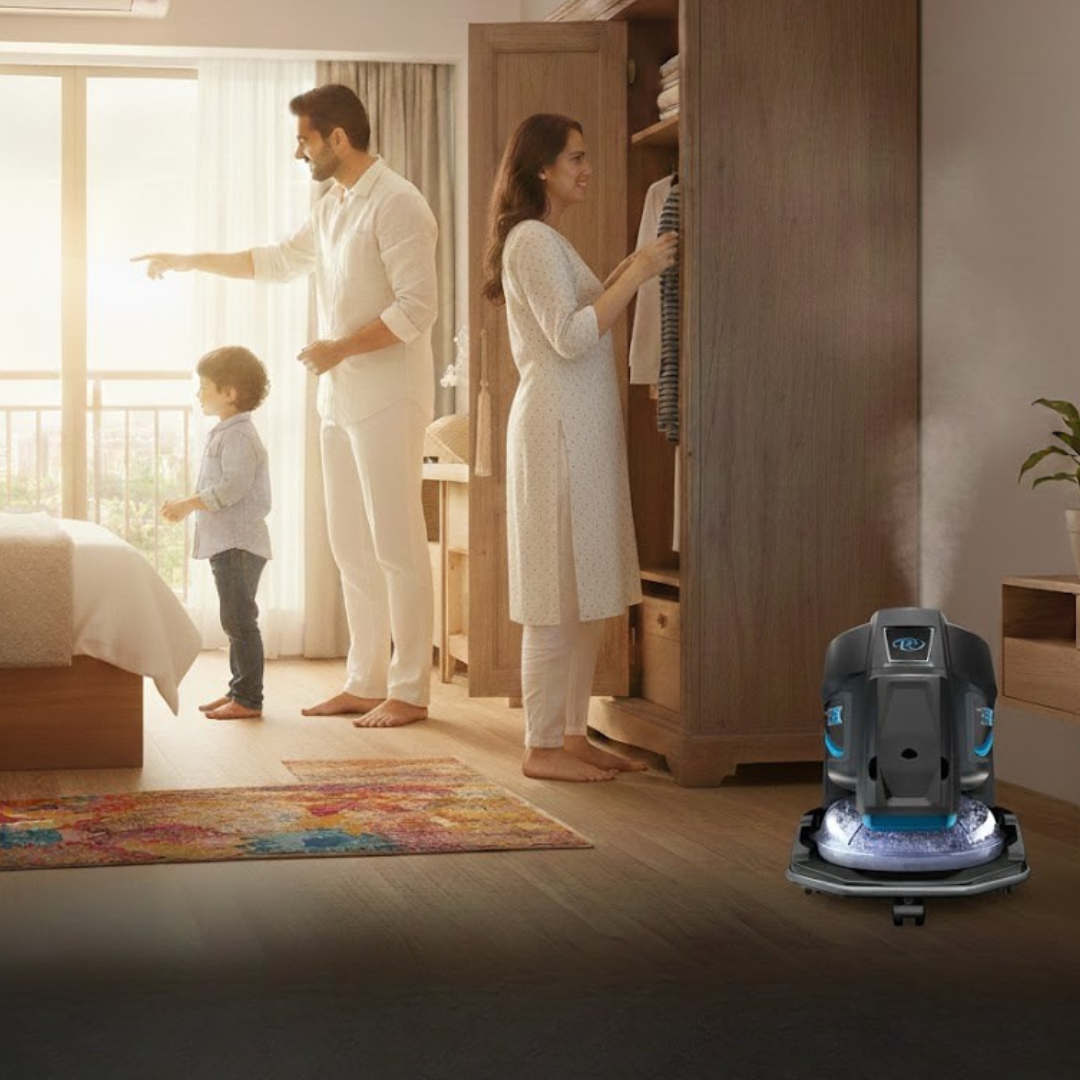
Closed indoor spaces such as bedrooms, bathrooms, wardrobes, and storage rooms are especially vulnerable to mold and fungus growth. For one urban family living in a well-maintained apartment, persistent musty odours, visible wall patches, and recurring health discomfort signalled a deeper indoor air quality issue. Despite regular cleaning and repainting, the problem kept returning.
This case study from Hygiene Homes illustrates how identifying the root cause and applying the right indoor air quality solutions, including the use of an air purifier for asthma and allergies, helped control mold and fungus, resulting in a healthier and more comfortable living environment.
The Problem: Mold and Fungus in Poorly Ventilated Areas
Mold and fungus thrive in dark, humid, and poorly ventilated spaces. In this home, the family noticed recurring mold growth in areas such as:
- Bathroom ceilings and corners
- Behind wardrobes placed against exterior walls
- A closed guest bedroom used infrequently
- Kitchen cabinets near the sink
Although the apartment appeared clean, windows were often kept closed due to outdoor pollution and noise. Over time, moisture from daily activities such as cooking, bathing, and drying clothes accumulated indoors, creating ideal conditions for mold growth.
The family experienced several issues, including:
- Persistent damp and musty smells
- Worsening allergy symptoms
- Occasional coughing and throat irritation
- Headaches and eye discomfort
- Concern about long-term health effects, especially for children
For households with sensitive occupants, mold exposure can significantly aggravate respiratory conditions, making solutions like an air purifier for asthma and allergies an essential part of indoor health management.
Realising that surface cleaning alone was ineffective, the family approached Hygiene Homes for a professional indoor assessment.
What We Found During the Assessment
The Hygiene Homes team conducted a detailed evaluation and identified three primary contributors:
1. Excess Indoor Humidity
Humidity levels in closed rooms consistently exceeded recommended limits, encouraging fungal growth.
2. Poor Air Circulation
Limited airflow in unused rooms and enclosed spaces allowed moisture to remain trapped.
3. Recurring Mold Spores in the Air
Even after visible mold was cleaned, airborne spores continued to circulate and resettle, contributing to allergy flare-ups and breathing discomfort.
Based on these findings, Hygiene Homes recommended a combined strategy focusing on air purification, humidity control, and preventive habits.
Introducing the Mold and Fungus Management Solution
The solution included the use of a high-efficiency air purifier for asthma and allergies with HEPA filtration, along with an integrated dehumidification approach. This setup was designed to:
- Capture airborne mold spores
- Reduce excess moisture in closed spaces
- Prevent spores from resettling on walls and furnishings
- Improve overall indoor air freshness and breathability
The air purifier was placed in the most affected closed room and later rotated between spaces such as the guest bedroom and living area. Continuous operation ensured consistent control of airborne contaminants that commonly trigger allergies and respiratory irritation.
Results Timeline: What the Family Experienced
Improvements occurred gradually but steadily, reinforcing the importance of consistent indoor air management.
Within the First Week
- Musty odours began to fade
- Indoor air felt noticeably drier and fresher
- Reduced irritation while breathing in closed rooms
After 2 Weeks
- No new visible mold spots appeared
- Allergy symptoms reduced, especially sneezing and throat discomfort
- Wardrobes and storage areas felt less damp
After 3–4 Weeks
- Sustained control of humidity levels
- Significant reduction in airborne mold spores
- Improved overall comfort and peace of mind
The family reported that this was the first time mold and fungus felt truly under control, rather than temporarily hidden.
Why This Approach Works Against Mold and Fungus
Mold problems cannot be solved by surface cleaning alone. Mold releases microscopic spores that remain suspended in the air and easily spread to new surfaces.
This solution worked because it:
- Removed airborne spores using HEPA filtration
- Reduced moisture levels that enable fungal growth
- Improved air circulation in closed spaces
- Prevented repeated exposure and regrowth
By addressing both the cause and the spread, the air purifier for asthma and allergies helped achieve long-term mold control rather than short-term cosmetic fixes.
Additional Preventive Steps Recommended
To maintain results, Hygiene Homes advised the family to adopt simple daily practices:
- Keeping wardrobes slightly open for airflow
- Avoiding drying clothes indoors
- Using exhaust fans during cooking and bathing
- Periodically opening closed rooms for ventilation
- Monitoring indoor humidity levels
Combined with air purification, these habits helped sustain a healthier indoor environment.
Key Takeaways for Homeowners
Mold and fungus are common in closed indoor spaces, even in clean and well-kept homes. Left unmanaged, they can affect both property and health—especially for individuals with asthma or allergies.
A targeted indoor air quality approach can:
- Control mold and fungus growth
- Improve respiratory comfort
- Reduce allergy and irritation symptoms
- Protect walls, furniture, and clothing
- Create a safer environment for children and elderly occupants
This case study demonstrates that effective mold management requires understanding indoor air, not just cleaning visible patches.
Building a Healthier Indoor Environment
Hygiene Homes continues to help families create healthier living spaces through expert assessments and practical indoor air solutions. This transformation shows how managing humidity, airflow, and airborne spores, supported by the right air purifier for asthma and allergies, can dramatically improve comfort and well-being.
A healthier home begins with cleaner air, and controlling mold and fungus is a critical step in that journey.